Eleven people,
and a grass field.
Ibushi works out of a timber shed on the edge of Furukawa, forty minutes north of Takayama. Everything we build goes up within about two hours of it: the farm valleys of the Hida basin, the gasshō villages over the pass, Takayama's merchant streets, and the Noto coast.
We take three or four houses a year. That is not scarcity marketing — it is how many frames one tōryō can mark, and he marks all of them.
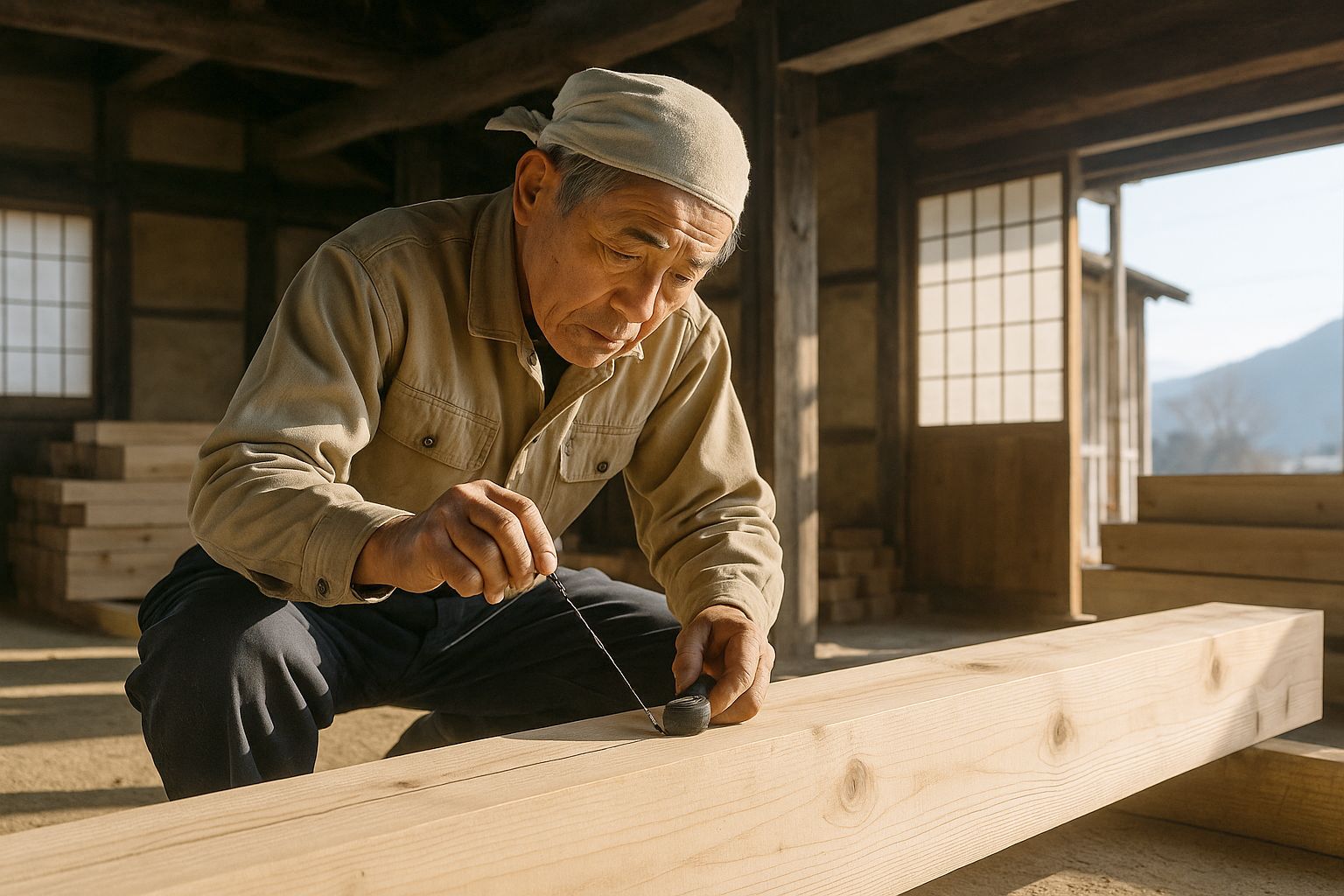
Hida paid its tax in carpenters.
Hida is mountains. Under the Ritsuryō system of the eighth century a province owed the capital rice and cloth, and Hida could produce neither in quantity — so it was permitted, uniquely, to pay in labour instead. Each year the province sent men to build in Nara and later Kyoto: roughly ten from each village, for a year at a time.
They were called the Hida no Takumi 飛騨の匠, and they built at the capital for something like four hundred years. The skill came back up the valley with them every year, and it is the only reason a remote snow province has a carpentry tradition of that order.
It is the one claim of pedigree this workshop makes, and it is a claim about a place rather than about a family. Anyone working timber in Hida is working downstream of it.
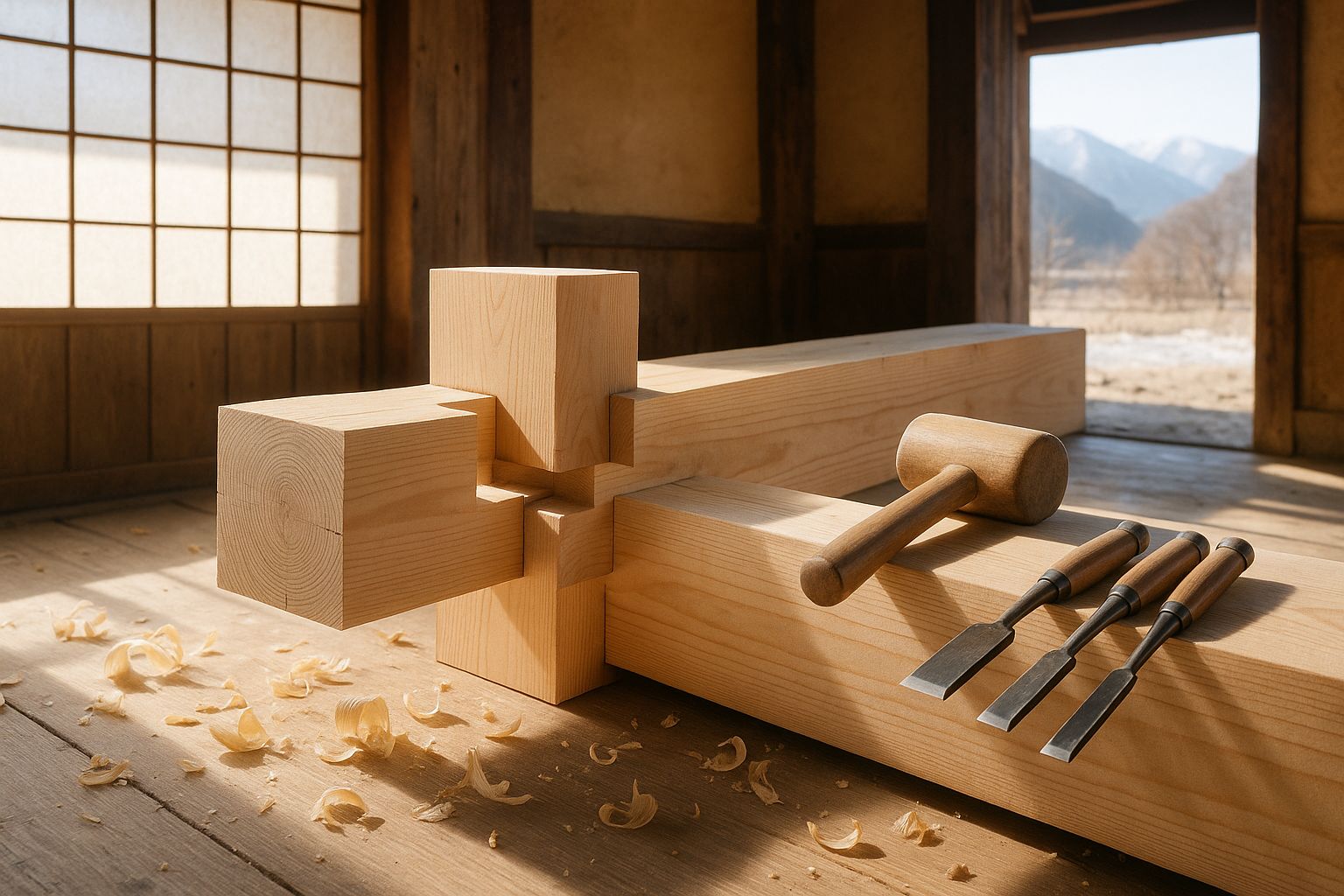
Who does the work.
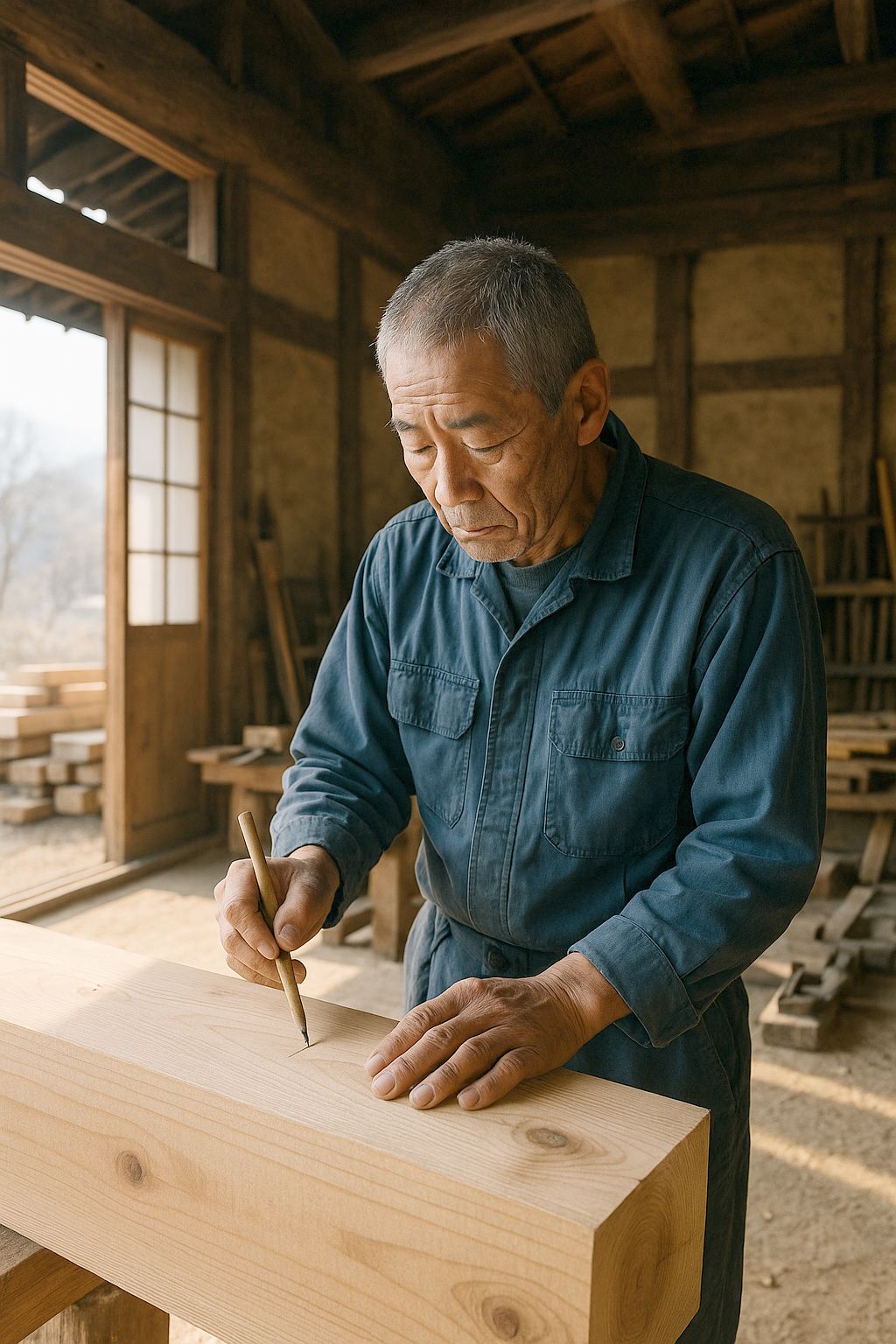
Ōno Sōhachi 大野宗八
Tōryō — master carpenter
Sixth of his line to hold the title. Marks every frame himself; has not let an apprentice cut a daikokubashira in thirty-one years.
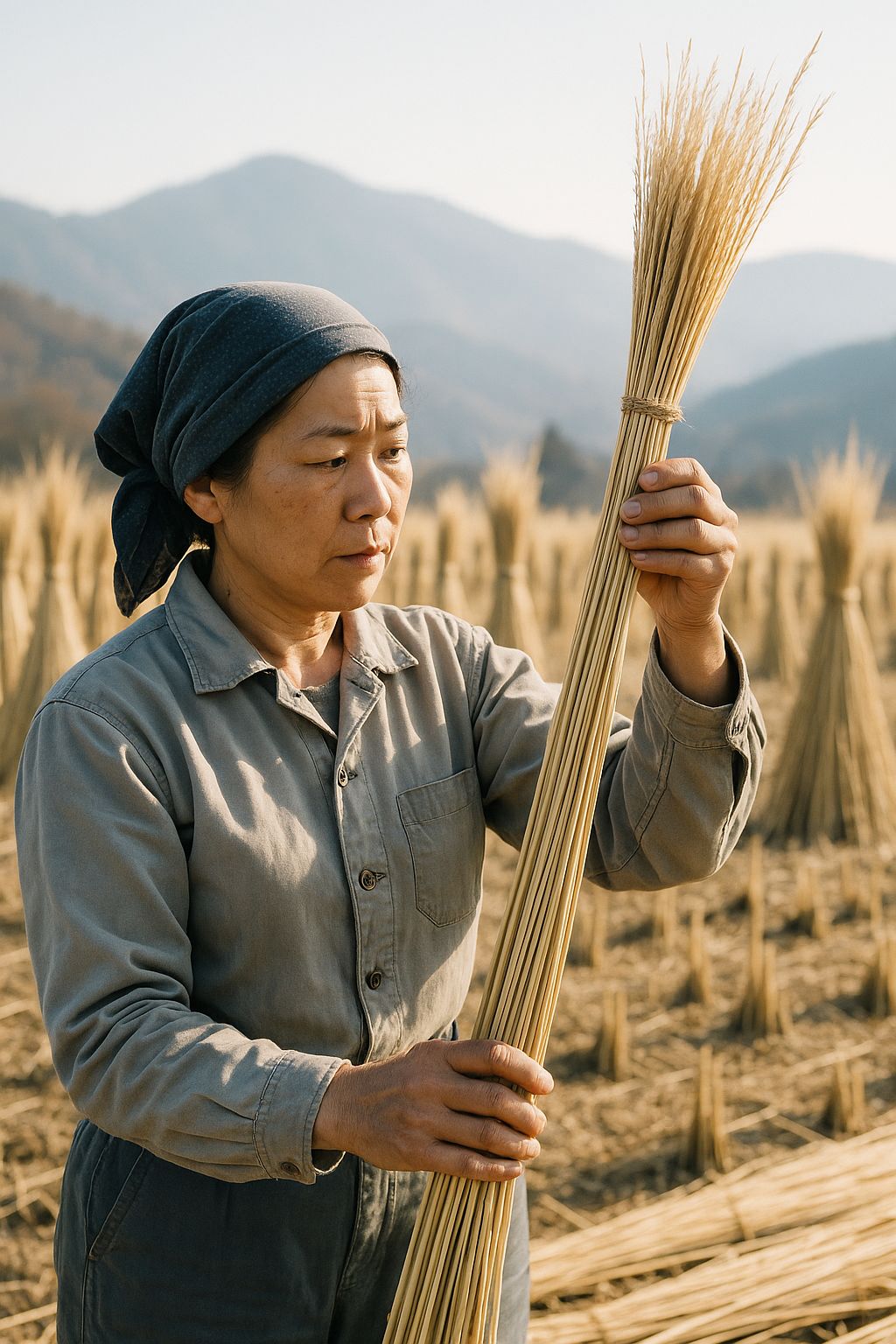
Mizuno Kaneko 水野兼子
Kayabuki-shi — master thatcher
Runs the workshop's kayaba above Furukawa and grades every bundle that goes onto a roof. Twenty-two years thatching, the last nine leading.
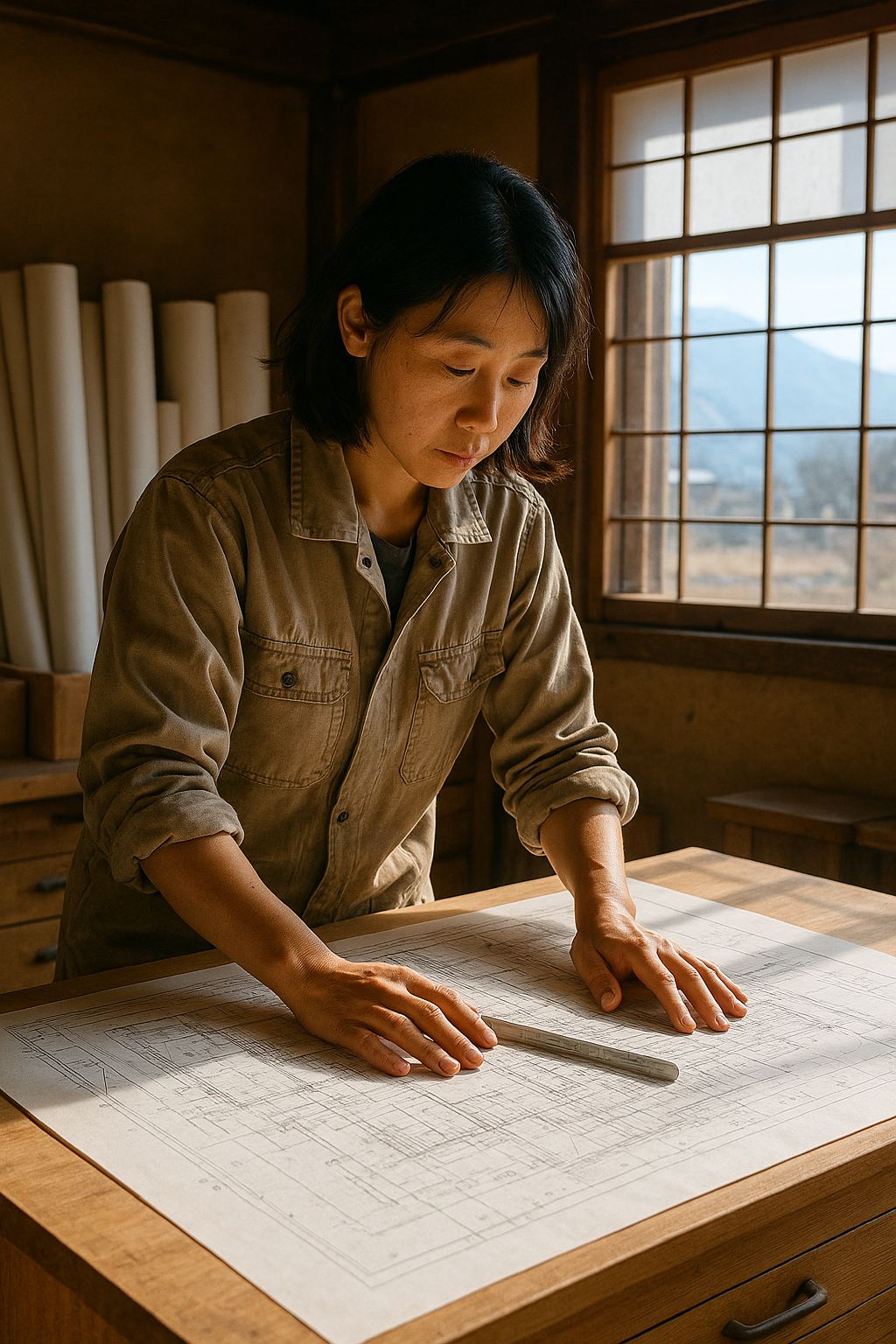
Ōno Rika 大野理香
Carpenter, and the office
Handles the surveys and the drawings, and cuts. Took the survey work over in 2019 when the archive was digitised.
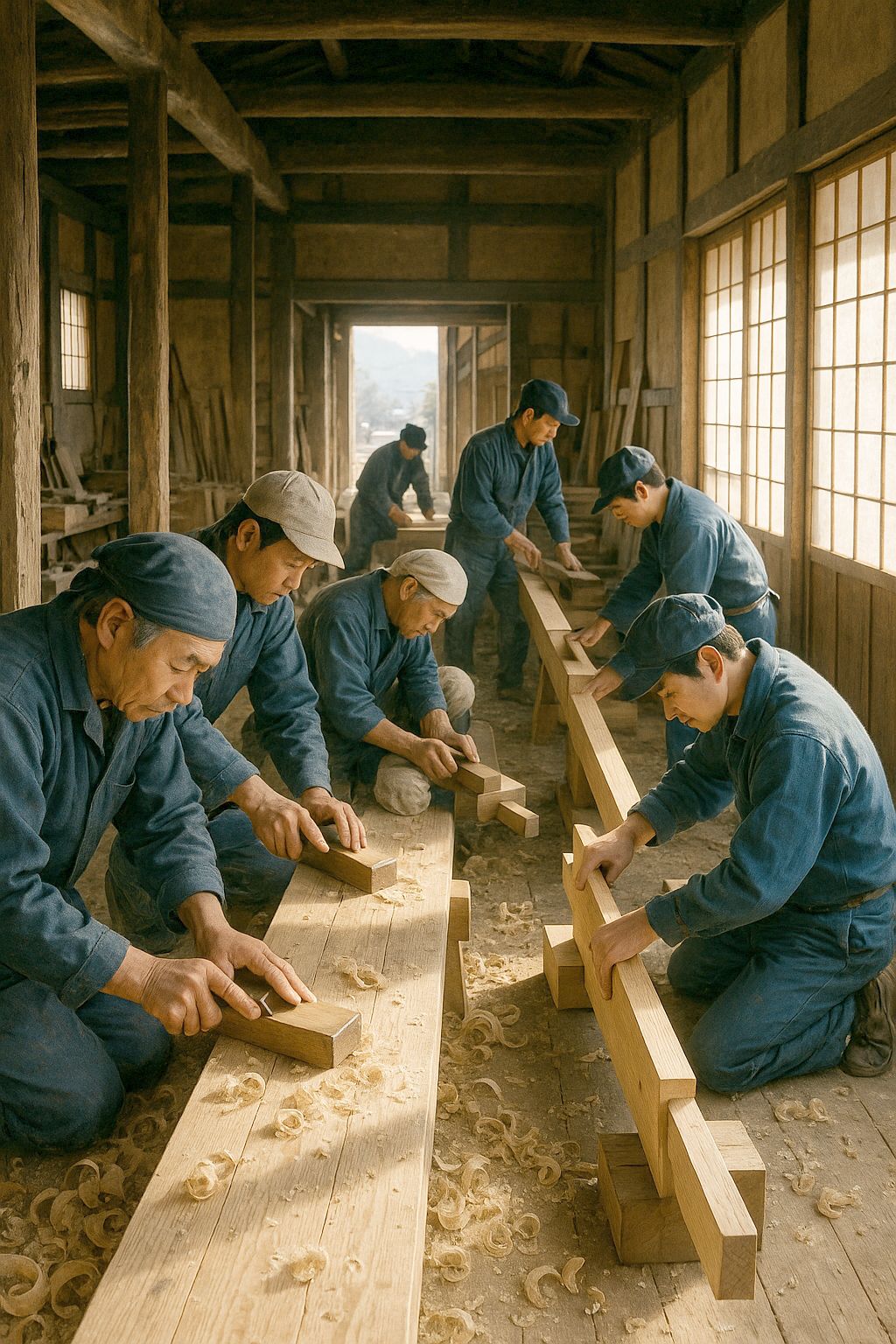
The carpenters
Daiku 大工
Six, between four and twenty-six years at the bench. Two of them came out of the Takayama machiya trade and brought the lattice work with them.
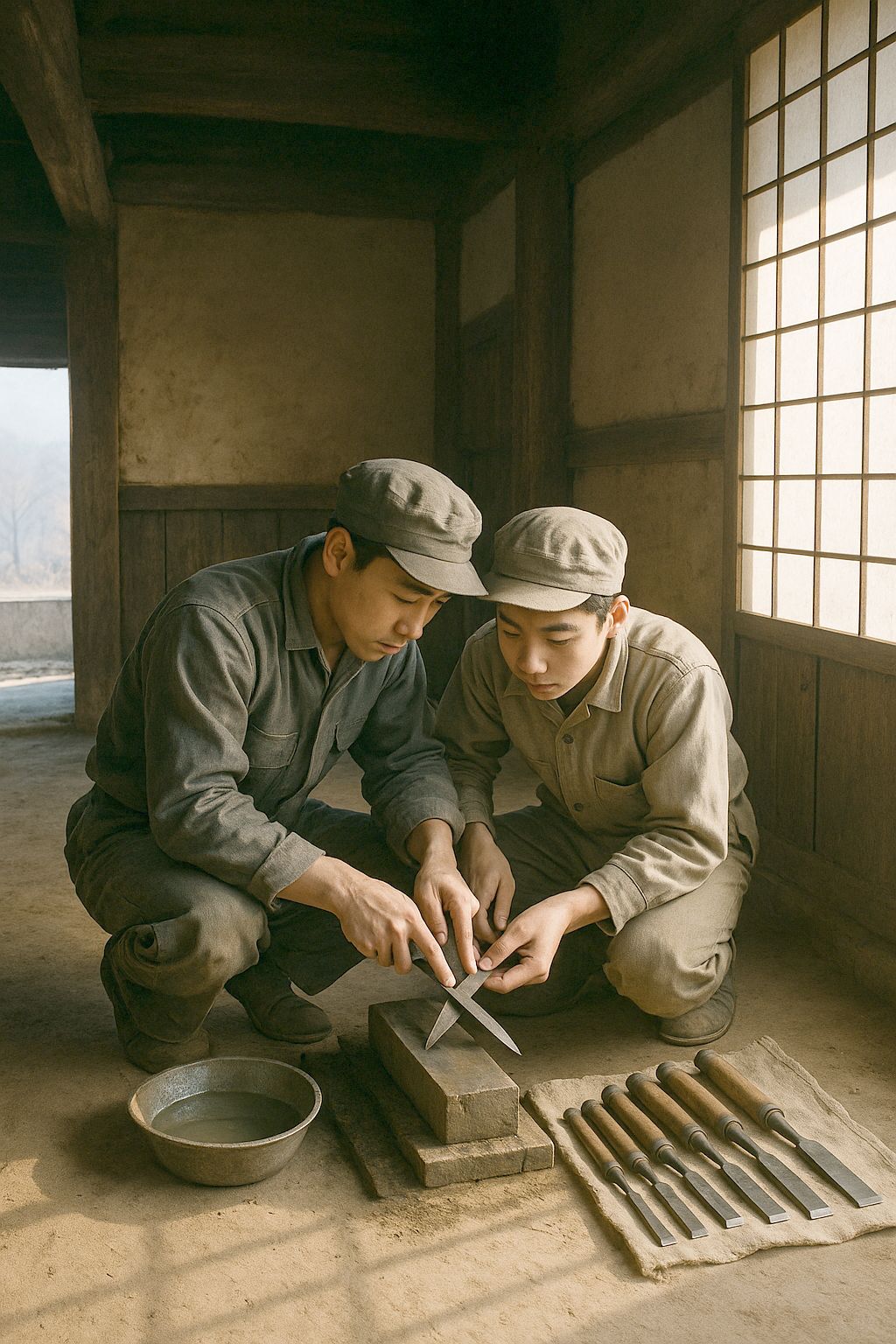
Two apprentices
Deshi 弟子
Five-year terms. The first year is sharpening, sweeping, and carrying, and nobody has ever been talked out of it.
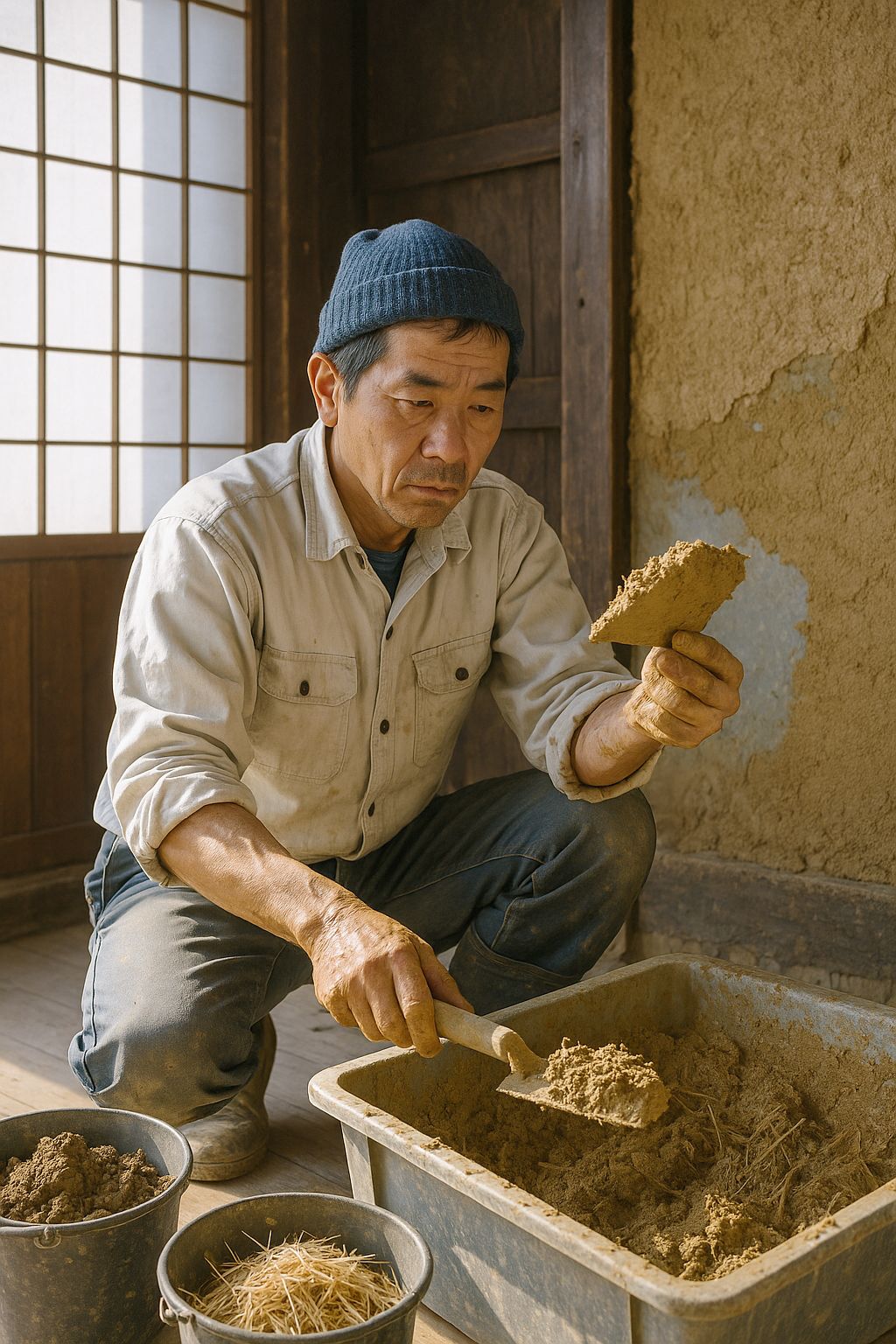
Nakai Tomo 中井とも
Sakan — plasterer
Mixes earth from the site where it can be dug. Works to the season: no finish coat between December and March.
You cannot buy this in a hurry.
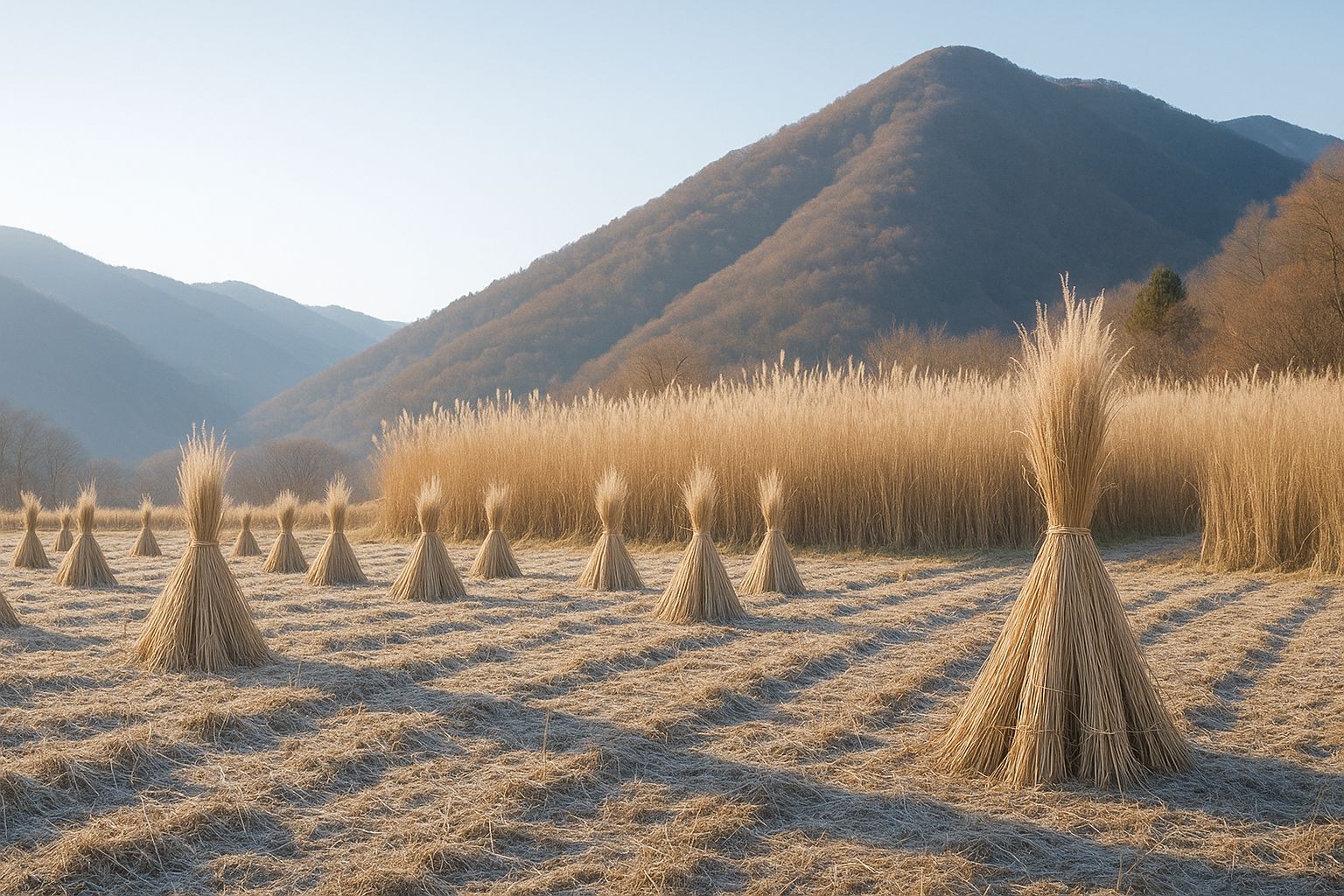
A kayaba is a grassland held and burned off each spring for one purpose: to grow miscanthus for thatch. Ours is eleven hectares on a south slope above Furukawa, cut in late autumn after the first frosts have taken the moisture out of the stem, then stood in bundles in the field to finish drying.
A gasshō roof takes something on the order of ten thousand bundles. No merchant holds that; it has to be grown, and it has to be grown nearby, because carriage costs more than the grass. Villages held kayaba in common for exactly this reason and lost them when the roofs went to tile.
We bought ours outright in 1994 after two seasons of trying to buy thatch in and finding there was none to buy.
Forty people, one slope, one day.
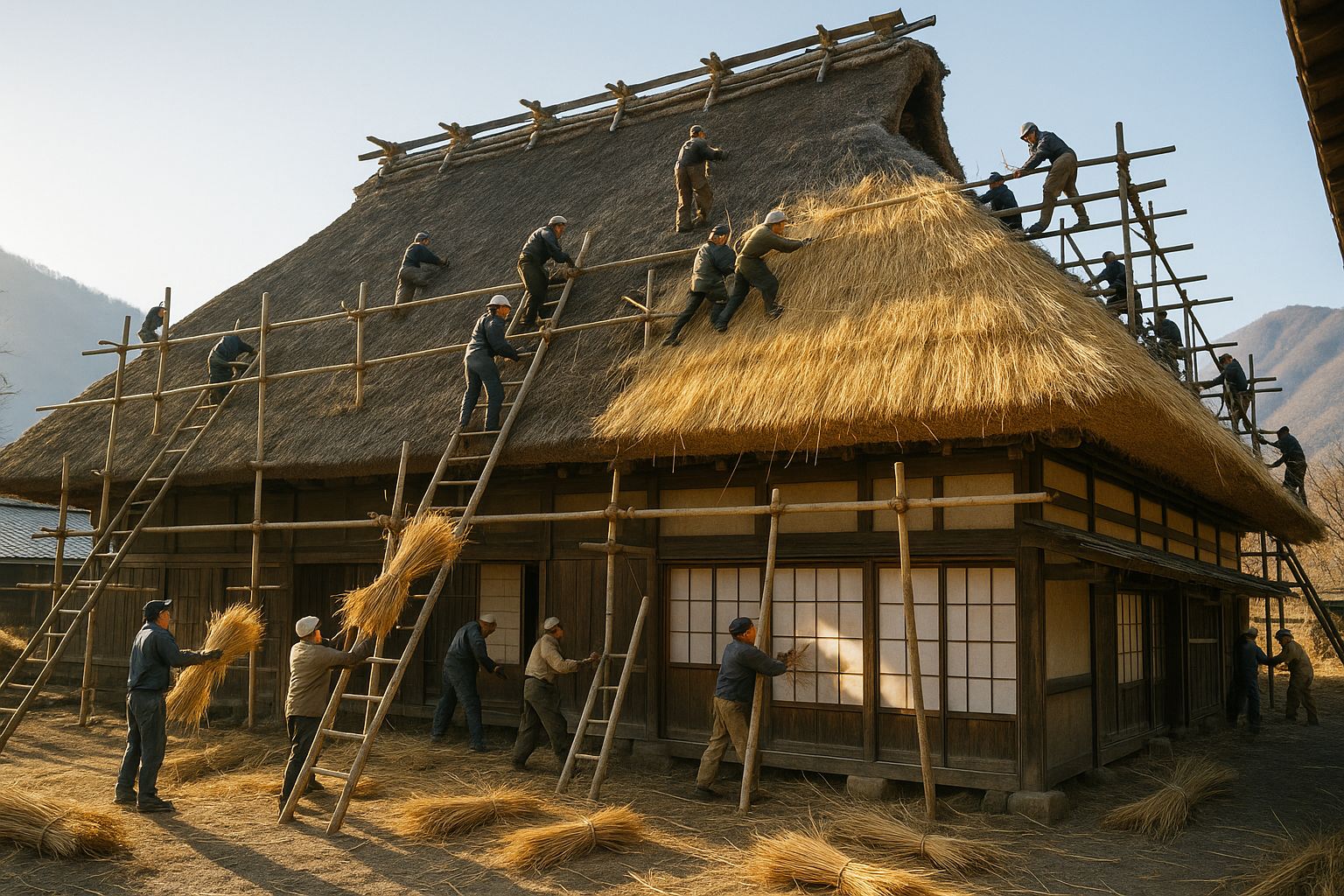
Re-thatching is not a job you can hire your way through. One slope of a gasshō roof is stripped and re-laid in a single day, because a roof opened to the weather cannot be left open, and that takes forty pairs of hands at once.
Yui is the mutual-aid system that supplied them: the village turned out for one household, the household fed everyone, and the debt was written down and repaid when it was someone else's roof. It is a labour ledger, and it is the reason these villages held together as villages.
We still work to it. We bring the scaffold, the grading, the ridge and the tōryō; the village brings the hands. Where there is no longer a village to bring them, we say so before we quote.
The short history.
- 1968
- Ōno Sōhachi's grandfather registers the workshop in Furukawa. Three men, all roof work.
- 1979
- First full relocation — a gasshō from a valley flooded for the Miboro dam, taken down over one winter.
- 1994
- The kayaba above Furukawa is bought outright after two seasons of buying thatch in.
- 2004
- Sōhachi takes the title of tōryō at thirty-eight.
- 2019
- The survey archive is digitised: 340 houses measured, of which 61 no longer stand.
- 2026
- Eleven people. Four houses on the books, two of them revivals with the fire already relit.
Come and see it.
The shed is open to visitors by arrangement, Tuesday to Friday. There is usually a frame on the ground.